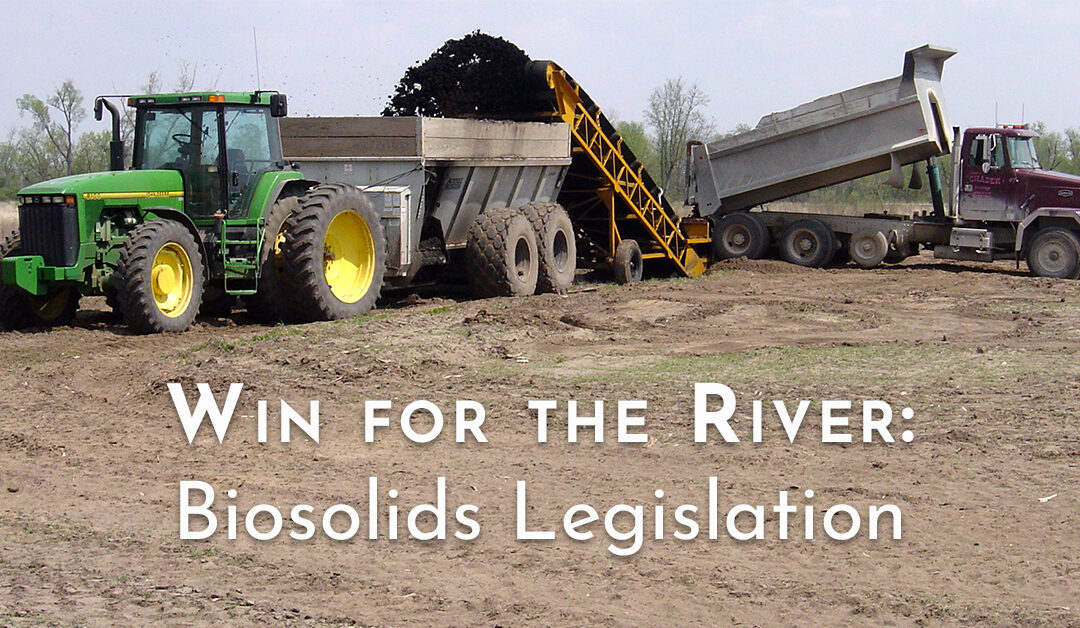
The Florida Legislature delivered a huge win for the St. Johns this year, with the most significant sewage sludge (aka biosolids) reform package in nearly 20 years.
To protect farm and ranch families from land/crop/cattle contamination, the Department of Agriculture’s 2026 Farm Bill banned the land disposal of Class B biosolids by 2028. Class B consists of sewage sludge that has been treated to reduce, but not eliminate, pathogens and toxic chemicals.
This ban will stop the permitted annual transfer of an average of 70,000 tons of South Florida’s sewage sludge to the Upper Basin of the St. Johns River and its $1 Billion Clean-Up Liability to downstream counties.
Legislation (HB 1285/ SB 1474) was also passed to provide regulatory guardrails for Class AA biosolids, a higher quality treated sewage sludge, to ensure that increased production does not result in increased nutrient pollution runoff and bulk disposal and offset gains from the Class B ban.
This happened thanks to the bill sponsors, Senator Bradley and Representative Shoaf, and the coalition of advocates including Public Trust for Conservation, 1000 Friends of Florida, Florida Springs Council and Audubon Florida.
Other legislative wins include:
Conservation land legislation (HB 441/ SB 546) by Rep. Kendall (R-St. Johns) and Sen. Mayfield (R-Melbourne) increases transparency when the state proposes to sell or exchange conservation lands. These bills were filed in response to last year’s proposal by a developer to swap land in the Guana River Wildlife Management Area.
The passage of PFAS legislation (HB 1019/ SB 1230) requires quarterly testing of wastewater/sewage sludge and phases out certain types of firefighting foams that often contain the PFAS “forever chemicals” which are linked to serious health impacts.
Learn more about the history of Sewage Sludge (biosolids) and the St. Johns here.