
The following is an article by Dr. A. Quinton White, originally published in the Florida Times Union.
—
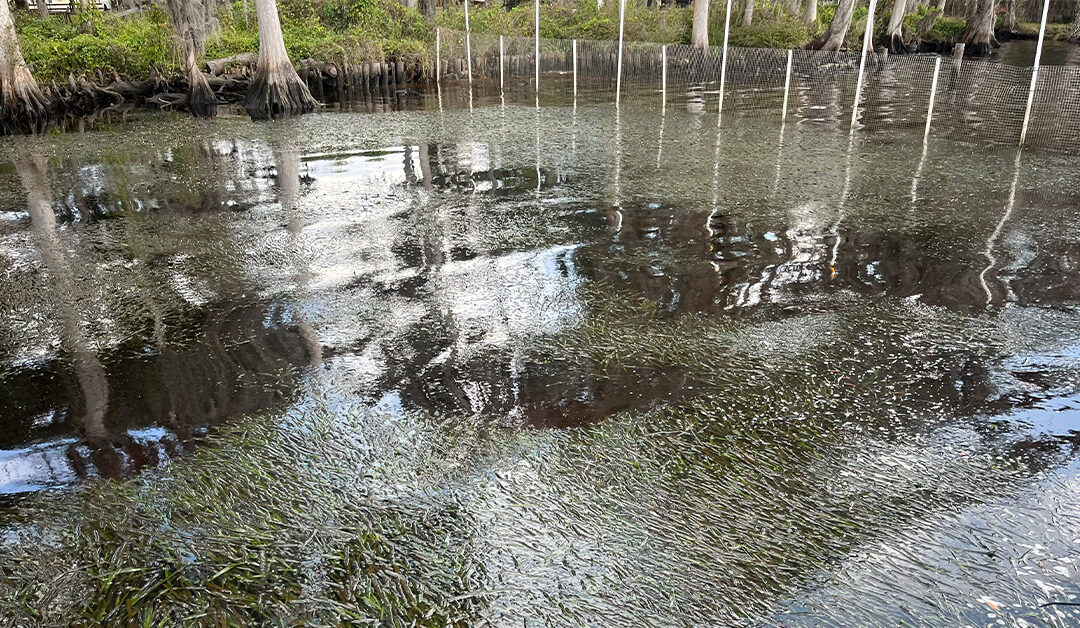
One of the key components for sustaining life in the St. Johns River is the submerged aquatic vegetation, or SAV, commonly called “eel grass.” The name applies to several species of aquatic plants, including Vallisneria americana, which is the most common SAV found in the lower St. Johns River. But they have been largely missing in the river since Hurricane Irma in 2017.
SAVs are a critical part of the food chain in marine and estuarine ecosystems. They are not only an essential part of the food web, but they also play a key role as nursery habitat. SAV beds are where the juvenile shrimp, crabs and fish initially live and grow.
Vallisneria is a freshwater plant that can only tolerate a slight increase in salinity and survive. One of the consequences of dredging the harbor in Jacksonville has been a gradual increase in salinity. That increase has also been impacted by climate change and sea level rise. Since 1928, when sea level data was initially recorded, there has been an over 10-inch increase in the average water level at Mayport, near the mouth of the St. Johns. Regretfully the rate of rise is increasing.
And then there was Irma.
Hurricane Irma deposited a massive amount of rainfall within the St. Johns River basin. That rain, coupled with the high water resulting from both the wind pushing water into the river and the low pressure that allows the water to rise, caused a compound flooding event. That is when a combination of storm surge, high tides, heavy rainfall or high river flows causes water levels to rise dramatically.
Water levels and river flow reached historic heights during Irma. And we are not even sure exactly how fast the river was flowing since the gauge measuring the rate was damaged and stopped recording.
All that fresh water should have been good for the SAVs but that was not the case.
The St Johns is a black water river due to the high tannic acid content from water flowing out of its swamps and wetlands. The same process that brews tea to drink causes the river to be dark, just like tea. The leaves and other debris leach out their tannins to give the water its color. That color also limits the depth of light penetration, which means that grasses cannot photosynthesize, or grow in water over about 3 feet deep.
During Irma, the increased flow also caused scouring and high turbidity. Turbidity is the term used to describe the haziness or cloudiness in water caused by suspended fine particles or sediment.
All those factors caused the SAV beds to disappear from the lower St. Johns River. And initially there was not a great deal of concern. We had seen this happen before and the grass beds had recovered over time.
But this time, something was different. Water levels remained higher than expected. And it remained higher longer than had previously been the case. And the grass did not recover. And they still have not returned.
So, what is happening and what can be done to help the grass beds come back?
The grass is trying to grow but is being eaten as soon as any small shoots appear. These grazers are fish, turtles, and manatees. And they are just doing what they would normally do.
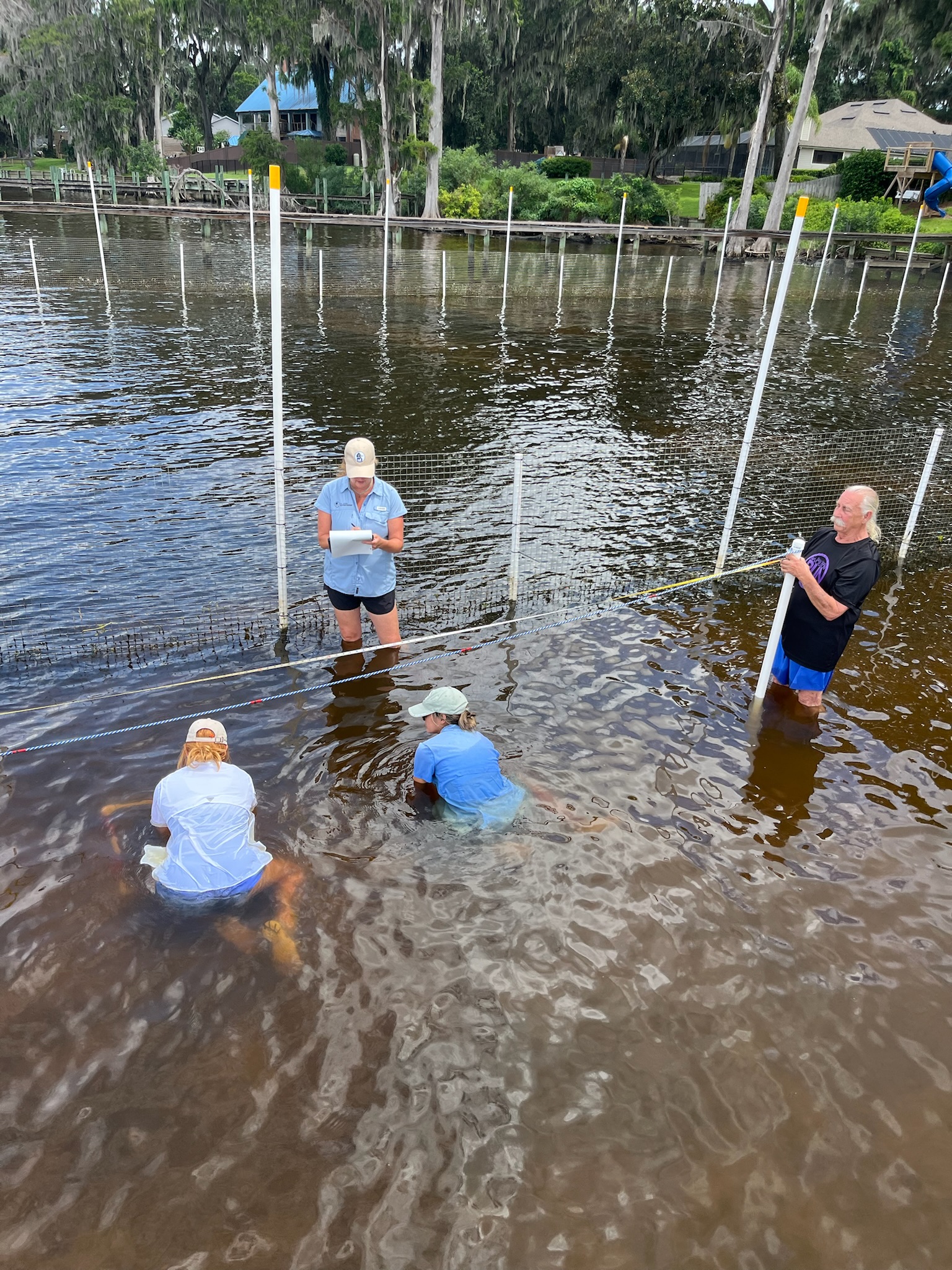 So, what can be done? Several organizations are working together to try to help the recovery effort. The Florida Fish and Wildlife Commission, along with St. Johns Riverkeeper, the Coastal Conservation Association and other concerned citizens are trying a series of experiments where they build exclusion cages around areas where the grasses are trying to return. By erecting fences, this will allow water to flow but excludes the grazers and give the grass a chance to grow and reestablish itself.
The basic concept is to reestablish the grass beds to increase their capacity for some grazing but limits the over grazing that had been occurring. The initial results look encouraging, but it will take time. Hopefully, we will see grass beds once again in the St. Johns.
Glad you asked River Life
Has the recent freezing weather caused any fish kills in the St. Johns River?
Fortunately, it appears that we have avoided any major fish kills from the recent cold temperatures. Water takes longer to cool, or to warm, than air, and temperature data in the river shows that the water did not get cold enough for long enough to cause a major fish kill. There were reports of scattered dead fish that may have been the result of the cold snap. Time will tell if other species, like manatees, were impacted by the cold.
Article by Dr. A. Quinton White
Learn more about St. Johns Riverkeeper’s SAVe Our River’s Grasses Expedition.