
SJRK responds to the St. Johns River Water Management District’s (SJRWMD) plan for the Upper Basin of the St. Johns River and the Indian River Lagoon
On February 27, the St. Johns River Water Management District released its first ever plan for the Upper Basin of the St. Johns River and the Indian River Lagoon. The plan detailed several priorities: real-time hydrologic monitoring, removal of phosphorus from biosolid runoff, snail kite breeding surveys, and control of invasive species.
However, St. Johns Riverkeeper found several gaps that must be imminently addressed to restore the Upper Basin’s health. Over the past few months, SJRK submitted a written public comment, met with SJRWMD representatives, and spoke in defense of the Upper Basin at the Governing Board meeting held on May 13, 2026. Our concerns included insufficient efforts for nutrient load reduction, inadequate management of biosolids and their impacts, and gaps in monitoring and restoration of submerged aquatic vegetation (SAV).
Insufficient Efforts to Reduce Nutrient Loads + Out of Date Water Quality Targets
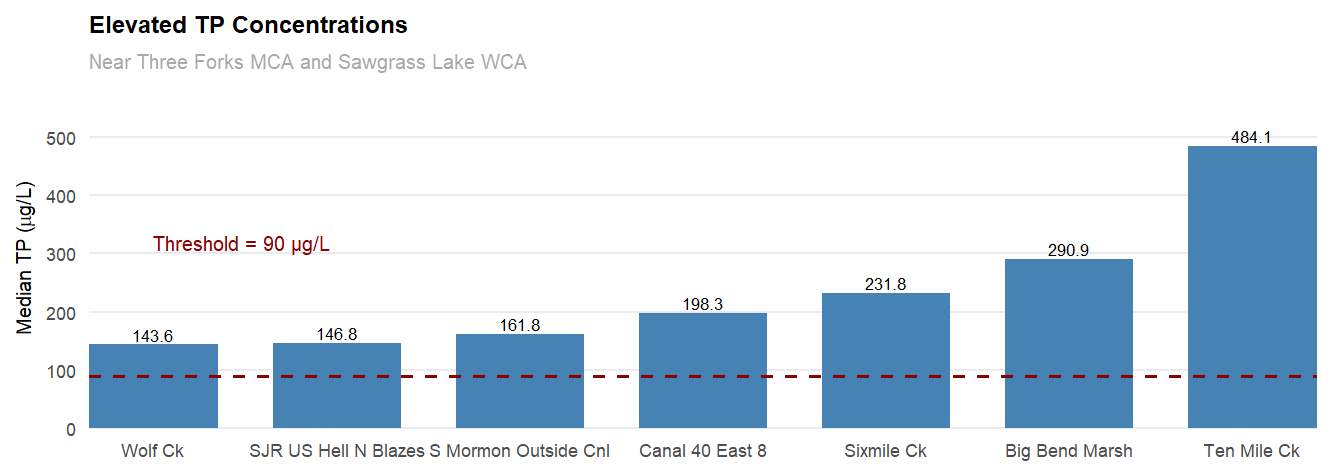
The Upper Basin contributes nearly 70% of the total nitrogen (TN) and total phosphorus (TP) flowing downstream into the Middle Basin lakes, impairing the watershed’s health. Although Pollution Load Reduction Goals (PLRGs) were established for key lakes using a target phosphorus level of 0.09 mg/L, current conditions show these goals are not being achieved. Nutrient pollution hotspots such as Big Bend Marsh, Ten Mile Creek, and Jane Green Creek now far exceed the target, while harmful algal blooms are becoming increasingly common in treasured waterbodies including Lake Washington and Blue Cypress Lake. At the same time, a dedicated Basin Management Action Plan (BMAP) for the Upper Basin is not expected until 2027. Given the accelerating water quality crisis, there is an urgent need for a stronger, binding regulatory framework that holds agencies accountable.
As water quality declines from mounting nutrient pollution, we urged the District to:
- Update outdated Total Maximum Daily Load and PLRG targets
- Incorporate Blue Cypress Lake into future nutrient analyses
- Expand monitoring coverage in impaired tributaries
- Fast-track the development of a BMAP
Biosolids: A Persistent Threat
More than two-thirds of the state’s sewage sludge has been disposed of on farmland along the banks of the Upper St. Johns River since this harmful practice was effectively banned in South Florida due to significant pollution run-off. This has had lasting, deleterious consequences for the headwaters.
Lake Washington, for instance, experienced a 44% increase in TP loads from 2016 to 2020 from the disposal of Class B biosolids on ranch land near the western tributaries. These nutrient inputs, combined with stormwater discharges and legacy phosphorus that lingers in soils 14 years after land application, contribute to toxic algal blooms and detectable microcystin levels in a drinking water source serving Melbourne. Biosolids contain PFAS, “forever chemicals” that don’t naturally break down in the environment and are associated with high blood pressure, cancer, liver disease, and harm to reproductive and immune systems. PFAS chemicals from sewage sludge spread on the land have been found to contaminate surface waters, groundwater, and feed crops, ending up in livestock and our bloodstream.
Florida’s 2026 Farm Bill will phase out Class B biosolid land application by 2028, limiting future use to Class AA biosolids. The legislation also adds regulatory guardrails for Class AA biosolids to help prevent increased nutrient runoff and bulk disposal, along with quarterly PFAS testing of wastewater sludge. While this is an important step forward, stronger oversight of biosolid land application is still needed through:
- Real-time groundwater and soil monitoring data
- PFAS testing transparency
- Fee structures levied against the utilities that generate and export the waste
- Evaluation of long-term nutrient leaching impacts
Insufficient Reporting on Submerged Aquatic Vegetation
While the SJRWMD’s Plan highlights seagrass restoration efforts in the Indian River Lagoon, there was little focus on eelgrass and other SAV communities in the headwaters. Yet, we know these habitats are the cornerstone of the river’s health. Local fishermen are already reporting disappearing eelgrass beds, but monitoring of SAV remains sparse.
Given that the headwaters is a data desert for SAV, we encouraged the District to build out a program involving:
- Aerial vegetation mapping
- Seedbank assessments
- Evaluation of herbicide and pesticide impacts
- Publicly accessible SAV datasets
The Path Forward
Based on the state of the Upper St. Johns, we called on the District to advocate for dedicated funding and resources that address the issues we’ve brought to fore. We urged the District for a more transparent, enforceable, and science-driven plan for the Upper Basin – one that matches the scale of the ecological challenges unfolding in our headwaters. Since the SJRWMD will continue updating the Upper Basin plan annually, we are committed to encouraging collaboration among agencies and communities to ensure the safety and health of the headwaters for years to come.