
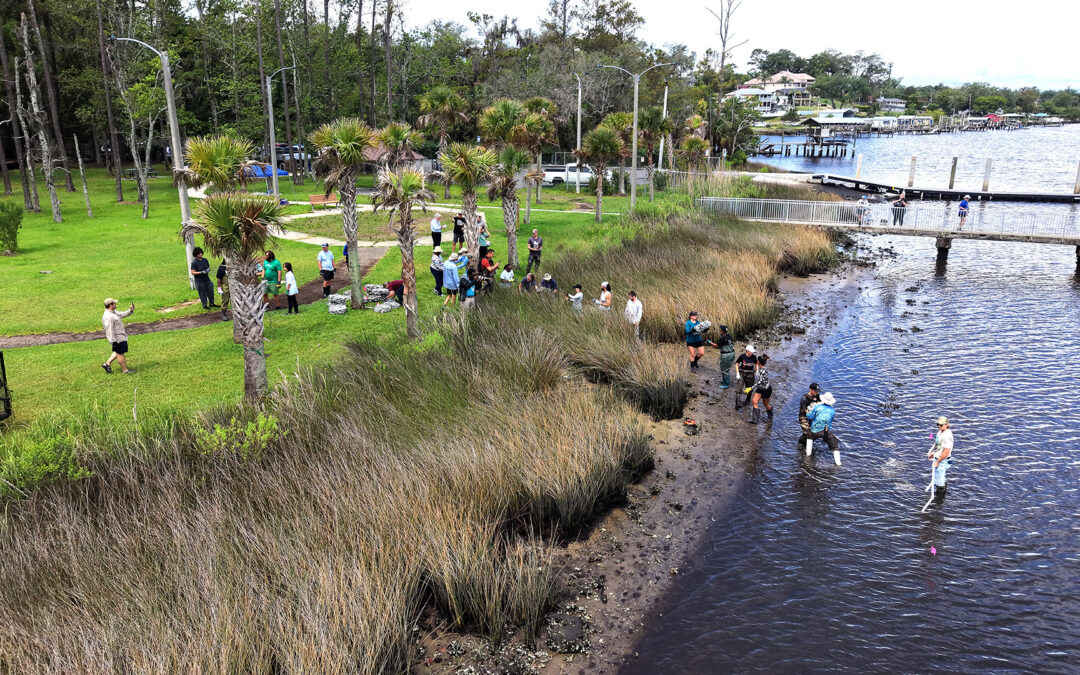
On June 10th, St. Johns RIVERKEEPER (SJRK), LISC Jacksonville, Riverview Collective Community Organization (RCCO), and Jax Oyster Conservation teamed up and brought volunteers together to extend the oyster reef along the shoreline at Riverview Park on the Trout River in Jacksonville.
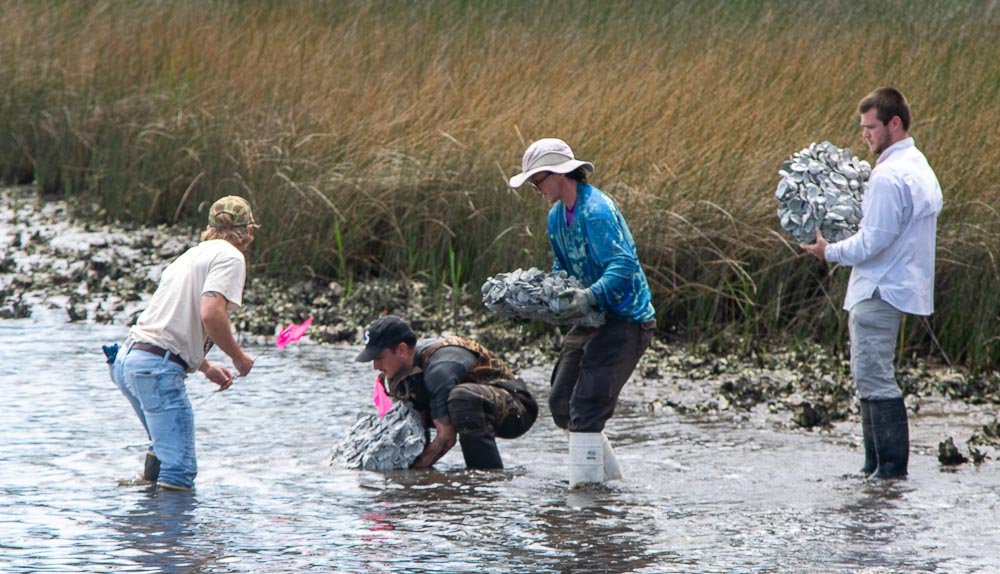
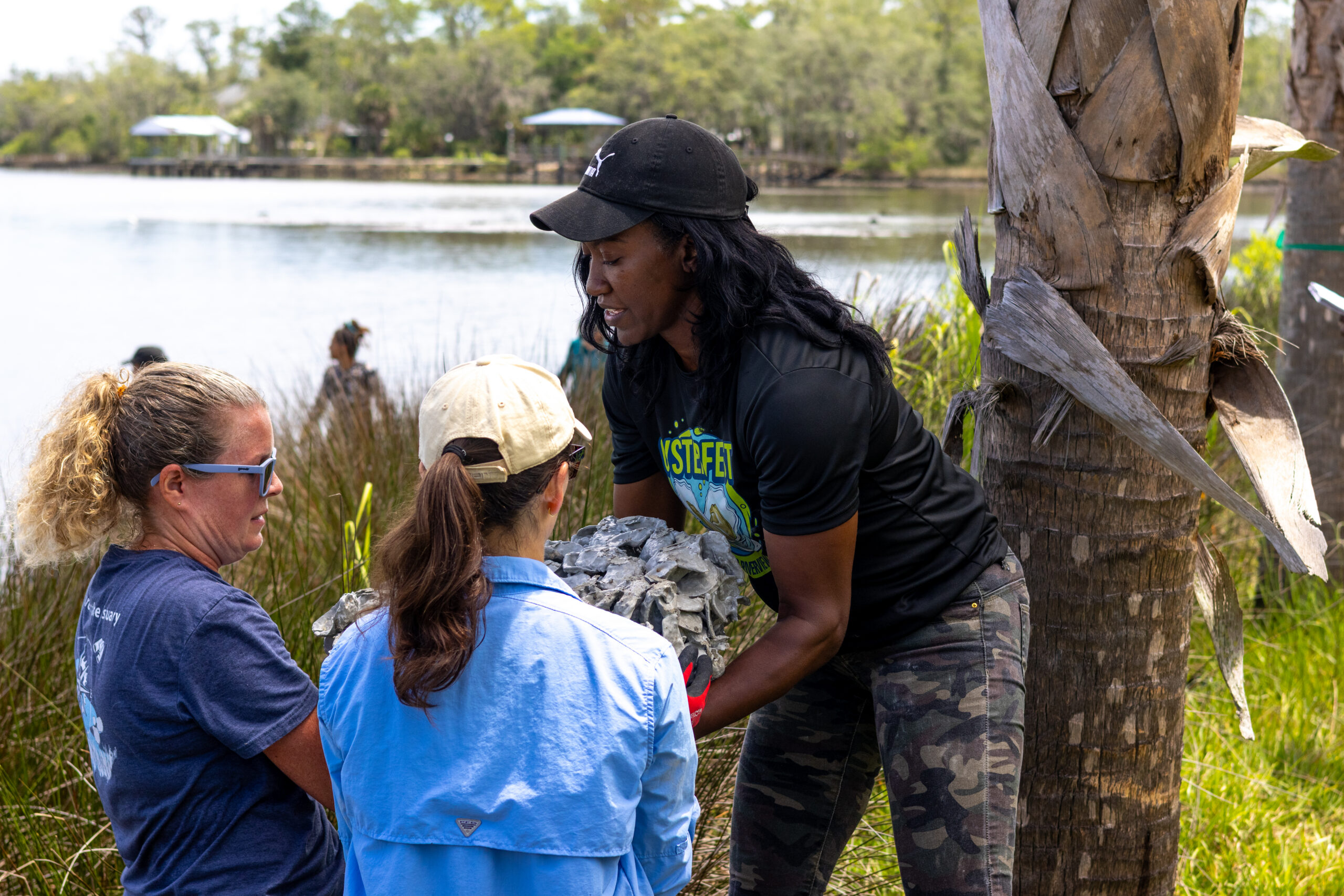 Together, more than 30 volunteers installed 84 Pervious Oyster Shell Habitat (POSH) modules. 40 modules were installed along the living shoreline in August 2025, which are already recruiting oyster growth. This is now the the largest artificial oyster reef in the St. Johns River watershed.
POSH modules are 30-pound+ balls of recycled oyster shells and cement that create habitat for oysters to grow. Oysters are powerful “filter-feeders” that help clean waterways of pollutants. Reefs also create habitat for hundreds of other aquatic species and provide natural buffers against coastal erosion and storm surges.
Credit: Leslie Kirkwood
“A single adult oyster can filter up to 50 gallons of water a day. By providing habitat for oysters to grow, this project will help to improve water quality and demonstrate the benefits of nature-based solutions,” said Trey Ford with St. Johns RIVERKEEPER.
“This project brings us closer to our vision of making Riverview Park a living laboratory for environmental education, restoration and eco-tourism in North Jacksonville,” stated Marshiray Wellington, Chair of Riverview Collective Community Organization (RCCO).
“The POSH method was developed after years of trial and research,” explains Hunter Mathews, the founder of Jax Oyster Conservation. “Compared to other oyster habitat structures, the POSH modules are completely plastic-free and have a lower carbon footprint, while providing excellent habitat for numerous aquatic organisms.”
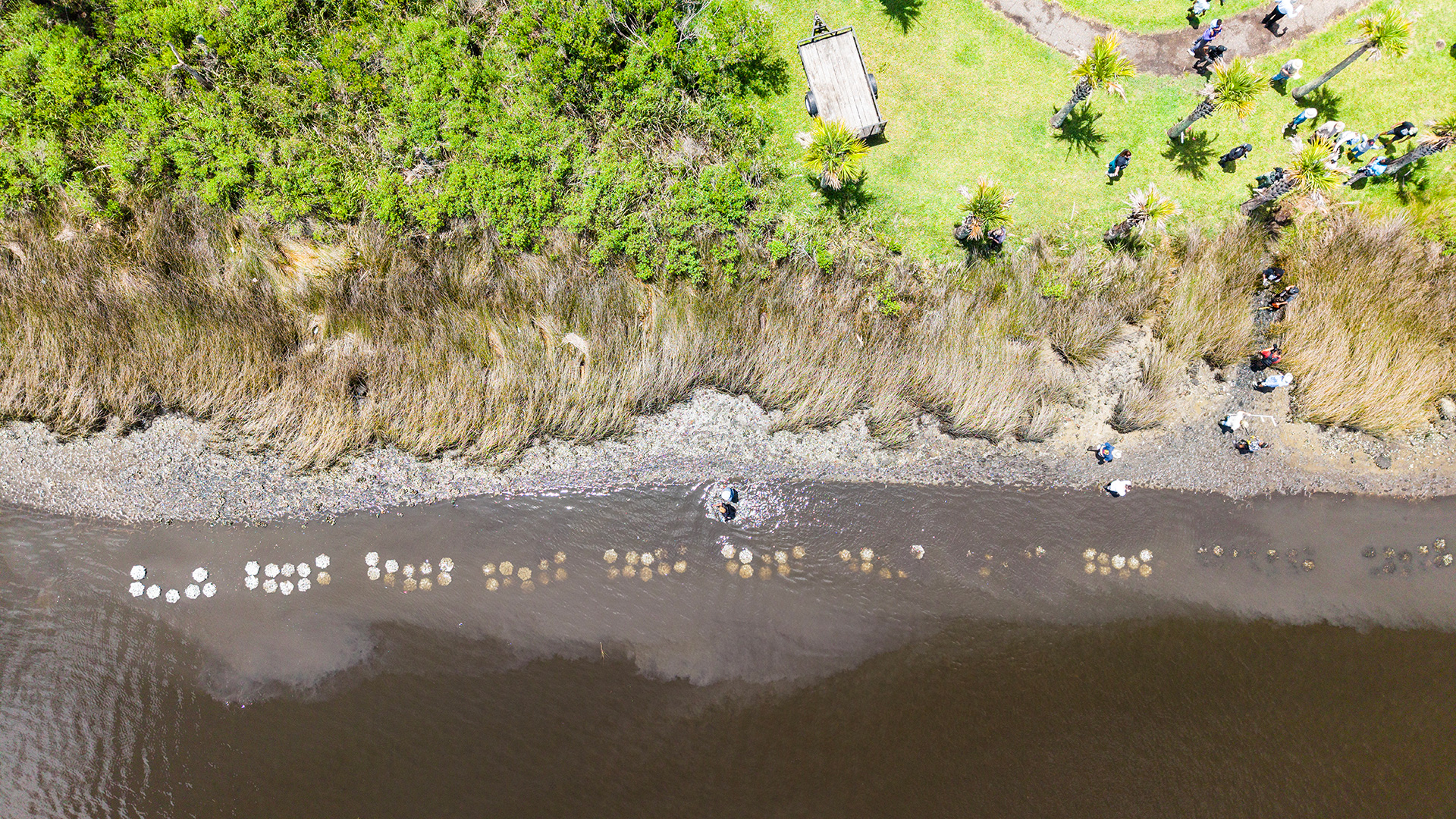
Credit: City of Jacksonville
The project is supported by a grant received by LISC Jacksonville from The Northeast Florida Environmental Conservation Fund established by St. Johns RIVERKEEPER and Public Trust for Conservation at The Community Foundation. Funding comes from settlements with industrial facilities illegally discharging polluted stormwater into local waterways. The oyster reef project will improve water quality near one of the facilities that was out of compliance with its permit and contributed to the fund.