
Submerged aquatic vegetation (SAV) is the foundation of our river’s health – providing biofiltration, fish habitat, erosion control, oxygenation of the water column, carbon sequestration and storage, and more.
Alarmingly, SAV is struggling throughout the St. Johns Watershed. We are witnessing the decline of submerged aquatic vegetation in the Upper, Middle and Lower basins.
 SAV is the river’s canary in the coal mine.
The St. Johns River is a Class III water that should have healthy fish habitat and waters that are fishable and swimmable.
Currently, the St. Johns does not meet this standard.
In 2008, the Lower St. Johns River Basin Management Action Plan (LSJR BMAP) was adopted to decrease nutrient pollution in the river to reduce harmful algal blooms, reduce fish kills, and increase SAV.
While there has been some progress made over the last 17 years, the success of the LSJR BMAP is dependent on a significant reduction of nutrient pollution from upstream sources, a reduction that has not come to fruition.
Failure to reduce upstream sources has led to years of non-compliance of the LSJR BMAP.
In 2024, the river had more harmful algal outbreaks and toxin cyanobacteria that exceeded its freshwater regulatory requirements. More algal blooms block much needed sunlight from reaching SAV.
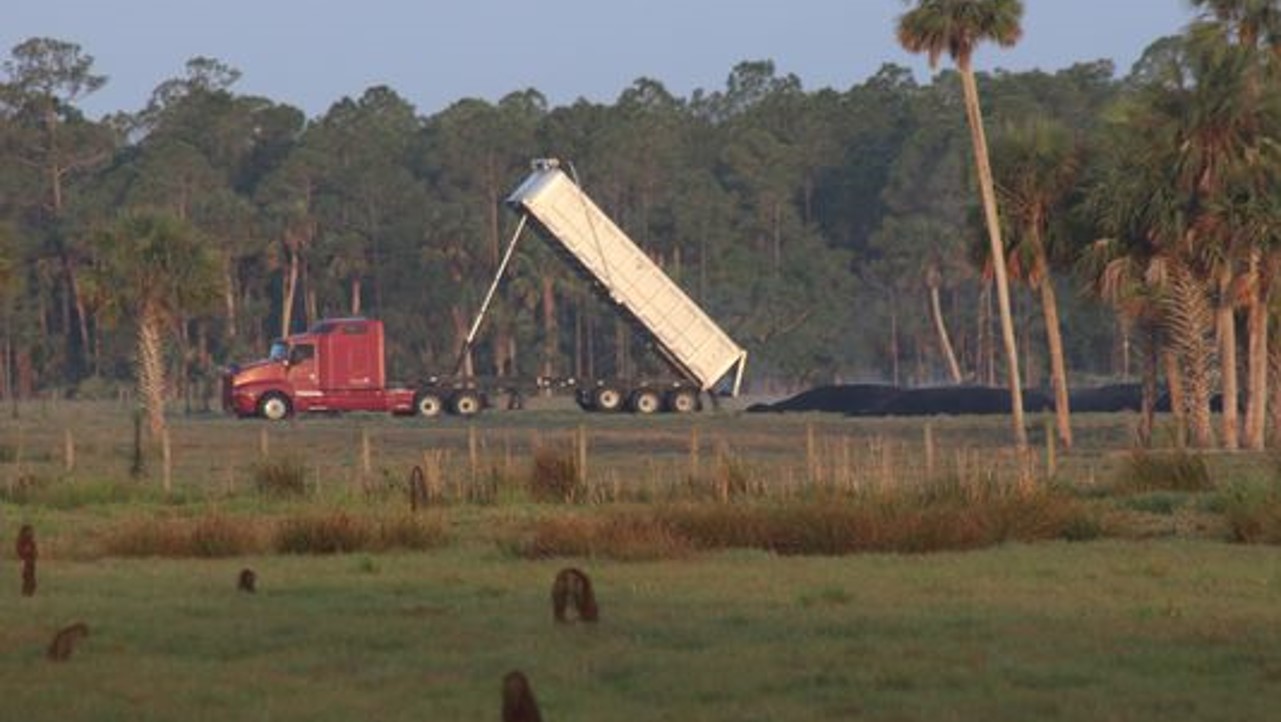
Meanwhile, upstream nutrient loading is increasing due in part to the high volume of sewage sludge disposed of on land within the St. Johns River Watershed.
Our river deserves to be fishable and swimmable. Now.
SAVe Our River’s Grasses
SAV Enclosure Installation
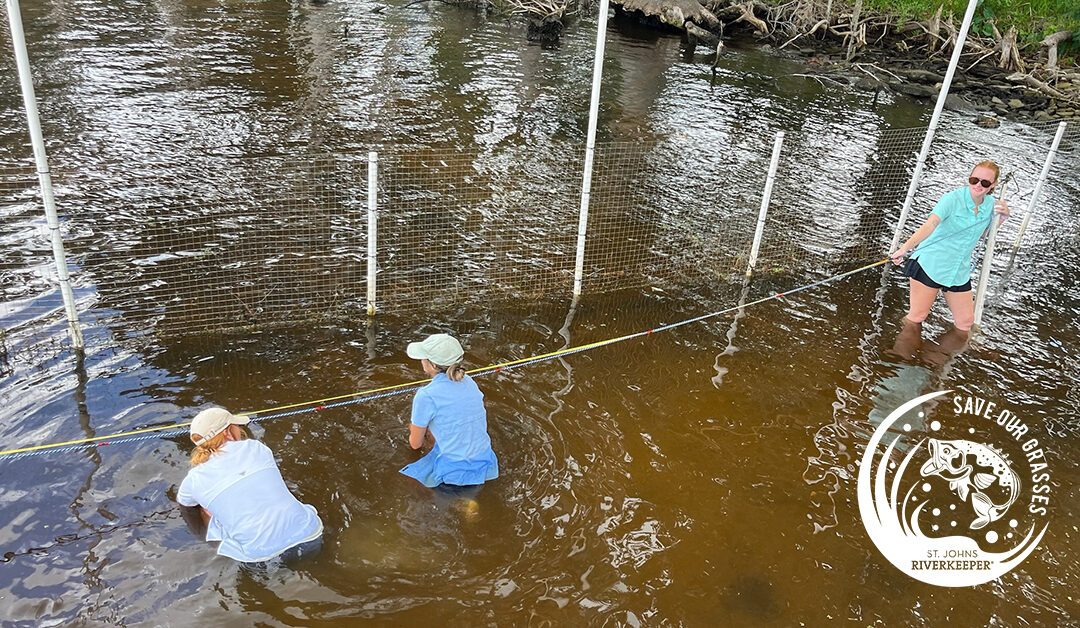
For three years, we have surveyed 14 sites from Doctors Lake to Lake George three times during the SAV growing season as part of our SAVe Our River’s Grasses Expedition.
In early 2025, we added protective enclosures to 10 of our 14 sites to determine if SAV could recover once protected from herbivory grazing pressure.
The good news is we are seeing some signs of recovery, but overall, there are significant reasons for concern.
All 14 of our monitoring sites are showing signs of intense grazing pressure from wildlife, high, dark water and frequent algae outbreaks.
In Clay and St. Johns Counties, there is additional stress from frequent salinity spikes.
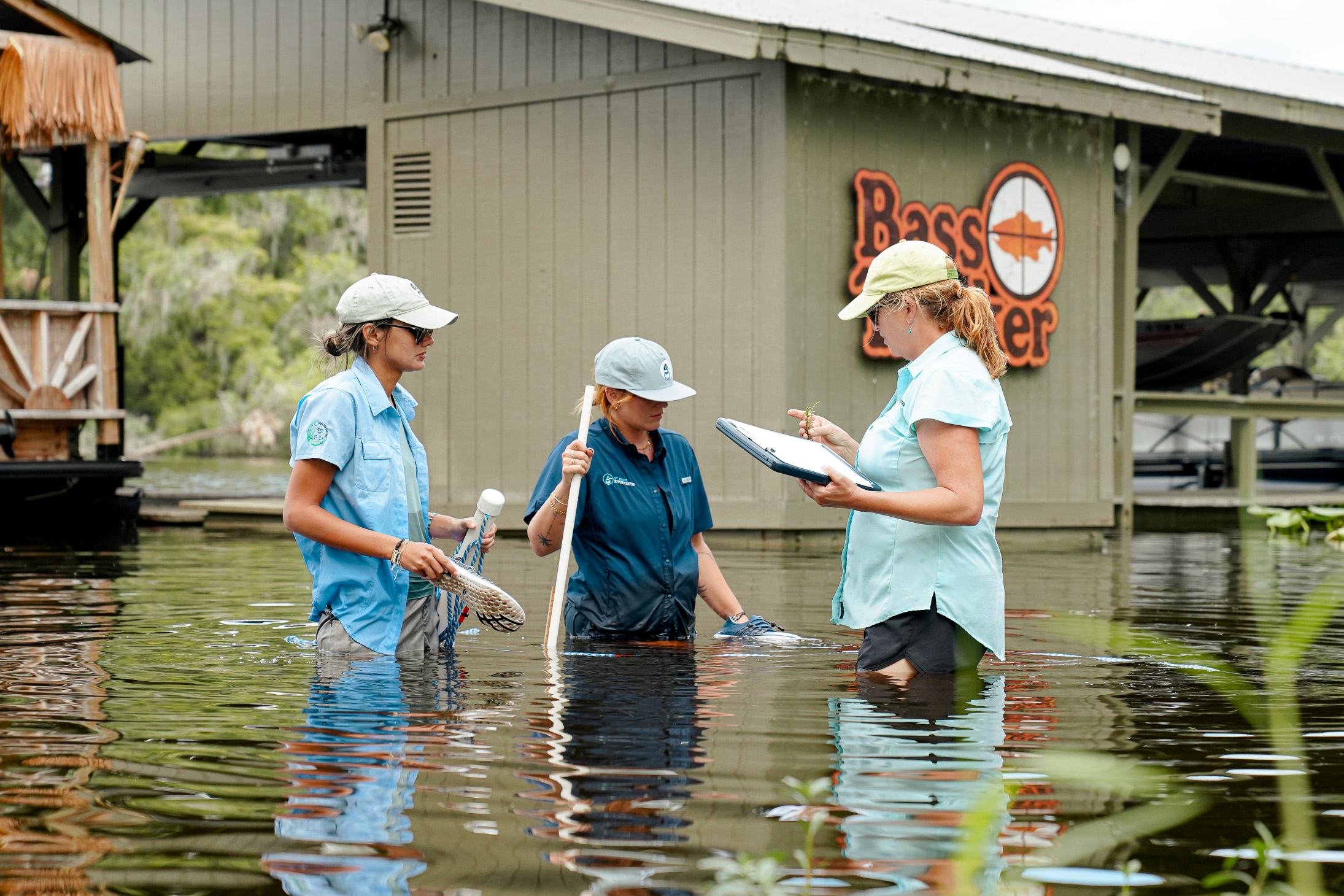 From Georgetown to Welaka, the river consistently looks like pea-green soup and tests positive for toxic cyanobacteria. In this segment, there is an almost complete loss of this ecosystem’s vital eelgrass.
We are encouraged to report that there is SAV growth within most of the protective enclosures and in some cases near to historic levels. However, outside the protected areas, the submerged grasses are grazed to near stubble.
So while SAV can still thrive in the St. Johns, multiple stressors may be slowing SAV growth enough for it to succumb to background grazing pressure. Stressors include saltwater intrusion, less light availability due to higher, darker water, frequent algae outbreaks, herbicide spraying, and invasive species.
We Must Take Action Now
 While there is not a silver bullet solution that will SAVe Our River’s Grasses, there are restorative and proactive measures that can reduce stress sooner than later.
Our river needs a holistic action plan that includes immediate relief, restoration projects, long-term preventative strategies and proactive measures to protect and restore the St. Johns River way of life for future generations to come.
For starters, steps must be taken to reduce upstream nutrient pollution in the St. Johns as the 2008 LSJR Basin Management Action Plan promised 17 years ago. One way to do this is to ban the transfer of South Florida’s sewage sludge to the St. Johns River Upper Basin.
Get ready to take action in January 2026 during the Florida Legislative Session.
Our river deserves to be fishable and swimmable. Now.