
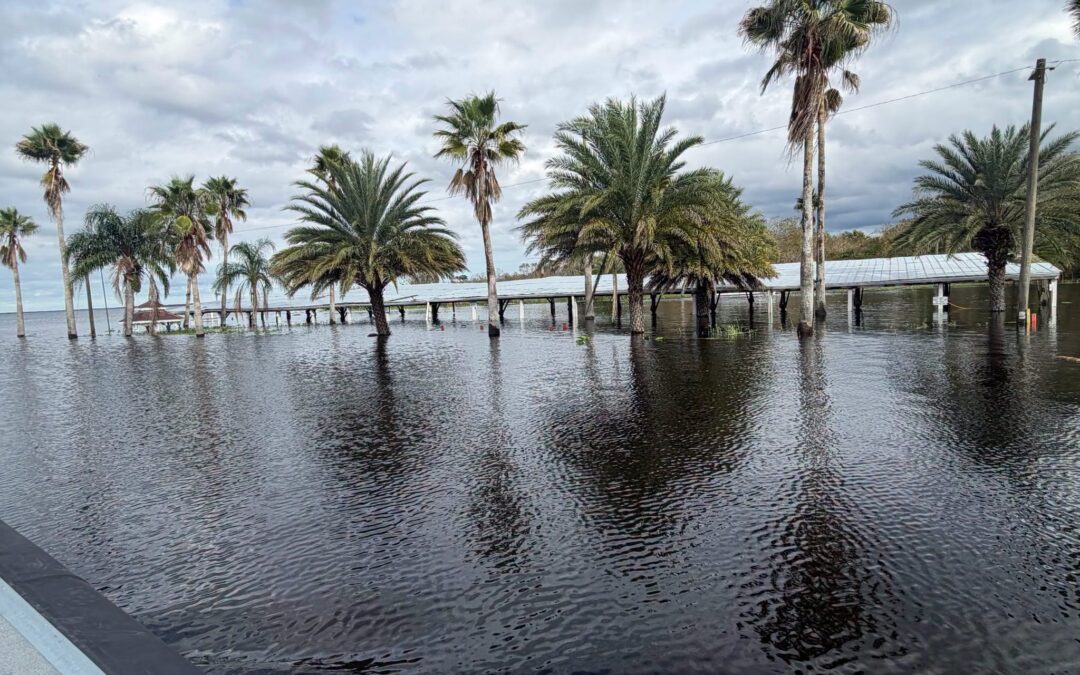
The National Weather Service is reporting record-level river flooding upstream along the St. Johns River and flood warnings throughout its watershed, with rain totals surpassing 28 inches in some areas. This follows the 1-in-1,000-year rainfall event in early November that affected the very same low-lying areas.
Flooding is expected to continue for weeks throughout the St. Johns River Watershed after record rainfall in November.
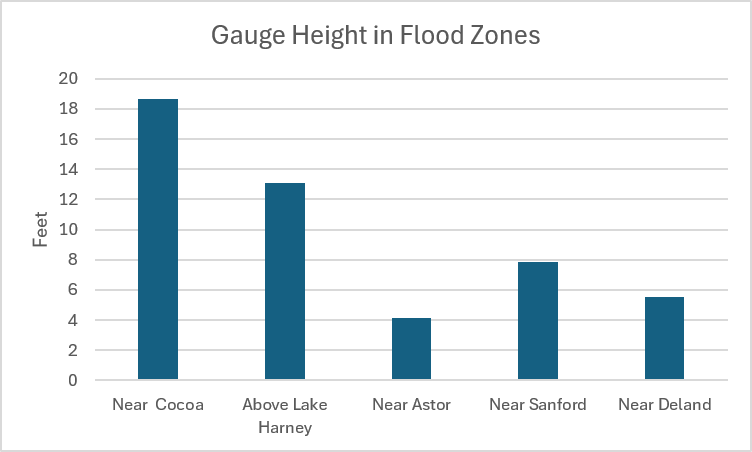 Near Cocoa, the river approached 18.76 feet on November 21, above its record line of 17.5 feet, and the gauge above Lake Harney near Geneva has also passed its previous record of 12.7 feet, leaving families in Rockledge, Cocoa, and Geneva to cope with flooded homes and roads. Since the river drops only about an inch per mile, this flood will persist even if the rain stops. The St. Johns River at Cocoa is expected to stay at or above moderate flood stage for at least two to three weeks, and water levels are expected to keep rising at Lake Jesup before floodwaters move toward Lake Monroe. In Seminole County, where over 40 roads have been shut down, flooding is projected to continue into December. Heavy rainfall in the Upper Basin of the St. Johns River has caused the river to exceed major flood levels in Astor and DeLand with river levels continuing to rise.
A developing nor’easter will push water into the St. Johns River from the Atlantic Ocean south and stack the water upriver. Astronomical king high tides occurring this week will make matters worse.
Aging Sewer Infrastructure Failing Under Pressure
Extreme flooding is also a reminder of the significance of our wastewater systems to our river ecosystems. From November 19-24, SJRK received 96 notices of wastewater pollution throughout the watershed due to overflows and system failures.
Due to excessive rains inundating the Upper St. Johns River Basin, stormwater drainage systems, wastewater treatment plants, manholes, and lift stations can become inaccessible, making cleanup measures impossible until water levels recede. These overflows are a mix of raw sewage, partially treated wastewater, and reclaim water. Several overflows occurred in the Lower Basin due to heavy rains, but the majority have been in the Upper Basin.
In Titusville, 49 of 118 lift stations hit high-level alarms, with overflows at the Master Pump Station and several manholes, and state records show Palm Bay and West Melbourne reported spills as well, including about 107,100 gallons of raw sewage in Palm Bay on November 19. At the same time, the Upper Basin’s flood-control system is holding about 60 billion gallons that would otherwise flow downstream. The movement of water is inextricably linked to protecting our vulnerable wetlands from development and upgrading aging sewer infrastructure.
FDEP continues to release excess water from the Rodman Pool to remove pressure on the high-hazard dam, flushing an already flooded St. Johns with more water. In Welaka, the rising floodwaters from the St. Johns overwhelmed the town’s vacuum sewer system and required the town to conduct an emergency shutdown to keep the sewage out of homes and the river, forcing area residents to use portable facilities for bathrooms, showers and laundry. It may be weeks before water levels recede.