Help us SAVe Our River’s Grasses.
Please consider a gift to help support our SAV research and advocacy efforts so we can continue this vital work to protect some of the most threatened habitat in our watershed.
Frequently Asked Questions (FAQ)
Submerged Aquatic Vegetation (SAV) Temporary Protective Enclosures FAQ
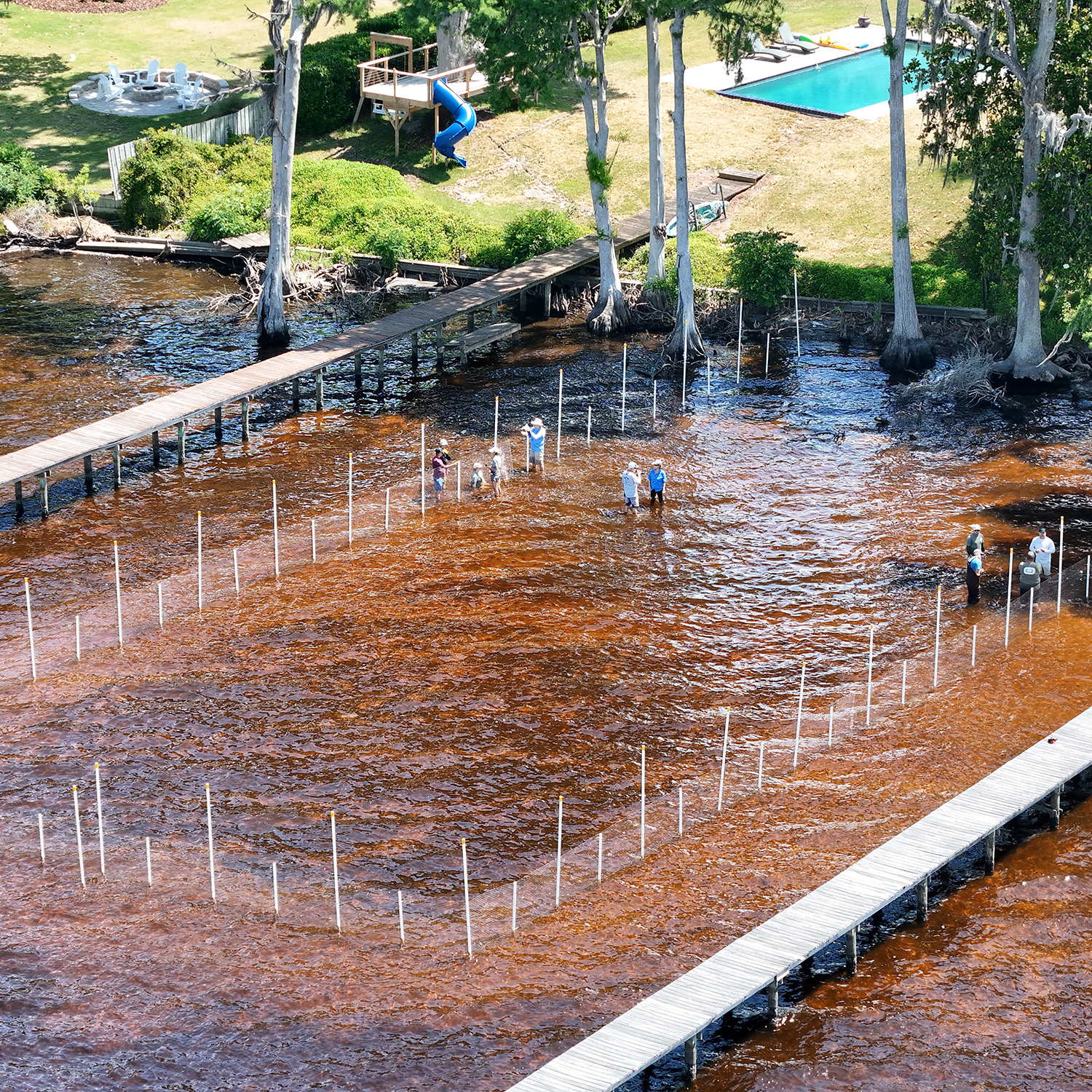
As part of the SAVe Our River’s Grasses Expedition, our team, in partnership with Coastal Conservation Association (CCA) Florida and Mighty River Recovery, has installed 10 temporary, protective enclosures along the 80-mile expedition route. The goal is to temporarily relieve “grazer pressure” (animals and fish eating or uprooting the grasses before they have a chance to grow) to assist the existing grasses’ ability to grow, germinate and disperse. This will provide us more data as we seek solutions to restore and expand the growth of the river’s native SAV.
Below, we answer some of the common questions we receive from the public about this initiative.
What is the purpose of the SAV enclosures?
St. Johns RIVERKEEPER’s Submerged Aquatic Vegetation (SAV) Protective Enclosure Initiative is designed to temporarily reduce herbivory pressure on native submerged grasses and their associated seed bank and rhizome networks.
By limiting grazing impacts, the initiative aims to enhance the natural capacity of existing SAV communities to grow, germinate, and disperse.
This restoration approach facilitates data collection critical to informing broader efforts to restore and expand native SAV populations in the St. Johns River. Notably, the initiative does not involve active SAV planting.
Why is SAV important?
Submerged aquatic vegetation (SAV) serves as a foundational component of the St. Johns River ecosystem, delivering a range of critical ecological functions. These include biofiltration of pollutants, provision of habitat and forage for both commercially and recreationally important aquatic species, shoreline stabilization, oxygenation of the water column, and long-term carbon sequestration and storage.
These underwater grass beds deliver a wide array of ecosystem services, including habitat structure and nutritional resources essential for both freshwater and estuarine species.
Numerous studies have demonstrated that SAV beds serve as critical foraging grounds and refugia for fish and aquatic invertebrates, reducing predation risk and enhancing biodiversity. Species such as largemouth bass (Micropterus salmoides), catfish (Ictalurus spp.), blue crabs (Callinectes sapidus), and shrimp rely on SAV for various life history stages, supporting both commercial and recreational fisheries in the region.
Quantitative assessments indicate that SAV beds in the Lower St. Johns River Basin supports fish densities approximately three times higher, and invertebrate densities 15 times greater, than adjacent unvegetated sand flats.
SAV also contributes to biofiltration by removing pollutants and assimilating excess nutrients, which might otherwise fuel the growth of bloom-forming or epiphytic algae.
Beyond their habitat functions, SAV systems also play a significant role in carbon sequestration. These beds contribute to climate regulation in two key ways: (1) their high annual biomass production enables substantial carbon dioxide uptake through photosynthesis, and (2) their underlying sediments are largely anaerobic, resulting in extremely slow organic matter decomposition and long-term carbon storage—often persisting for centuries to millennia.
What happened to the SAV in the St. Johns River?
Historically, the dynamic tidal balance between freshwater and saline inputs in the St. Johns River Estuary has supported the proliferation of healthy submerged aquatic vegetation (SAV) communities. However, SAV in the St. Johns River is increasingly threatened by a suite of environmental stressors, leading to a substantial decline in submerged grass communities.
The documented stressors to SAV are multifaceted and include:
- Lack of light penetration ( increased light attenuation)
- Increased salinity
- Water quality degradation
- Extreme climatic events
- Grazing pressure
The compounded impact of multiple environmental stressors has led to widespread loss of SAV throughout Duval, northern Clay, and St. Johns Counties—areas within the northern extent of the St. Johns River Estuary. Following Hurricane Irma in 2017, surveys indicated that SAV cover in the Lower St. Johns River, including Putnam County, declined by as much as 99%.
While SAV communities are known to exhibit periodic declines in response to natural disturbances such as drought or hurricanes, they have historically demonstrated resilience and capacity for regrowth within a few years. However, in the case of the St. Johns River, SAV abundance and species diversity have failed to recover in the years since Hurricane Irma—largely due to the persistent and interacting effects of light limitation, increased salinity, degraded water quality, extreme climatic events, and sustained grazing pressure.
What is the timeframe for this project?
All protective enclosures are intended to be temporary and will be removed within two years of installation, contingent upon observed SAV recovery within the enclosed areas.
What will define if this project is successful?
In this reach of the St. Johns River, existing SAV is currently limited to short, heavily grazed vegetation. This severely diminished growth form is (1) too limited in height and biomass to be targeted by manatees and other herbivores and (2) insufficient to support the development of a robust rhizome network capable of facilitating vegetative expansion and providing a sustainable forage base.
The objective of the enclosures is to allow SAV to grow undisturbed over two full growing seasons, enabling the accumulation of above- and below-ground biomass. Under these conditions, it is expected that SAV will colonize the entire area within the enclosures and that rhizomes will spread laterally beneath the substrate, extending beyond the fenced boundaries. This approach aims to promote long-term SAV resilience and expansion, while delivering the broader ecosystem services associated with healthy submerged vegetation.
St. Johns RIVERKEEPER (SJRK) is committed to rigorous data collection as part of the SAVe Our River’s Grasses Expedition, a five-year initiative now in its third year. The primary goal of this effort is to better understand and address the decline of SAV in the St. Johns River.
Throughout this expedition, SJRK teams conduct surveys along an 80-mile stretch of the river, from Doctors Lake to Lake George. During each multi-day field visit, team members search for remaining grass beds, collect ecological data, perform water quality testing, and explore potential strategies for restoring this vital habitat.
As part of the monitoring phase, surveys are being conducted both inside and outside of experimental SAV enclosures to assess grass survival and growth rates.
A compelling example of success on a larger scale was observed within the Florida Fish and Wildlife Conservation Commission’s (FWC) three-acre enclosure at Dancy Point observed by data collection in 2023. Here, the SAV canopy demonstrated remarkable growth in a short time-frame — from a maximum height of just 7 cm in May 2023 to over 100 cm by October—reaching historically significant lengths.
The average canopy height in October of that year inside the enclosure was 45.5 cm, with 60% average percent cover. In contrast, outside the Dancy Point enclosure, SAV was significantly grazed down, with an average height of only 1.8 cm and 41% coverage. These conditions are consistent with other unprotected areas, illustrating the intense grazing pressure on SAV due to the scarcity of available food sources throughout the Lower St. Johns River.
Are there any negative environmental or safety impacts from the enclosures?
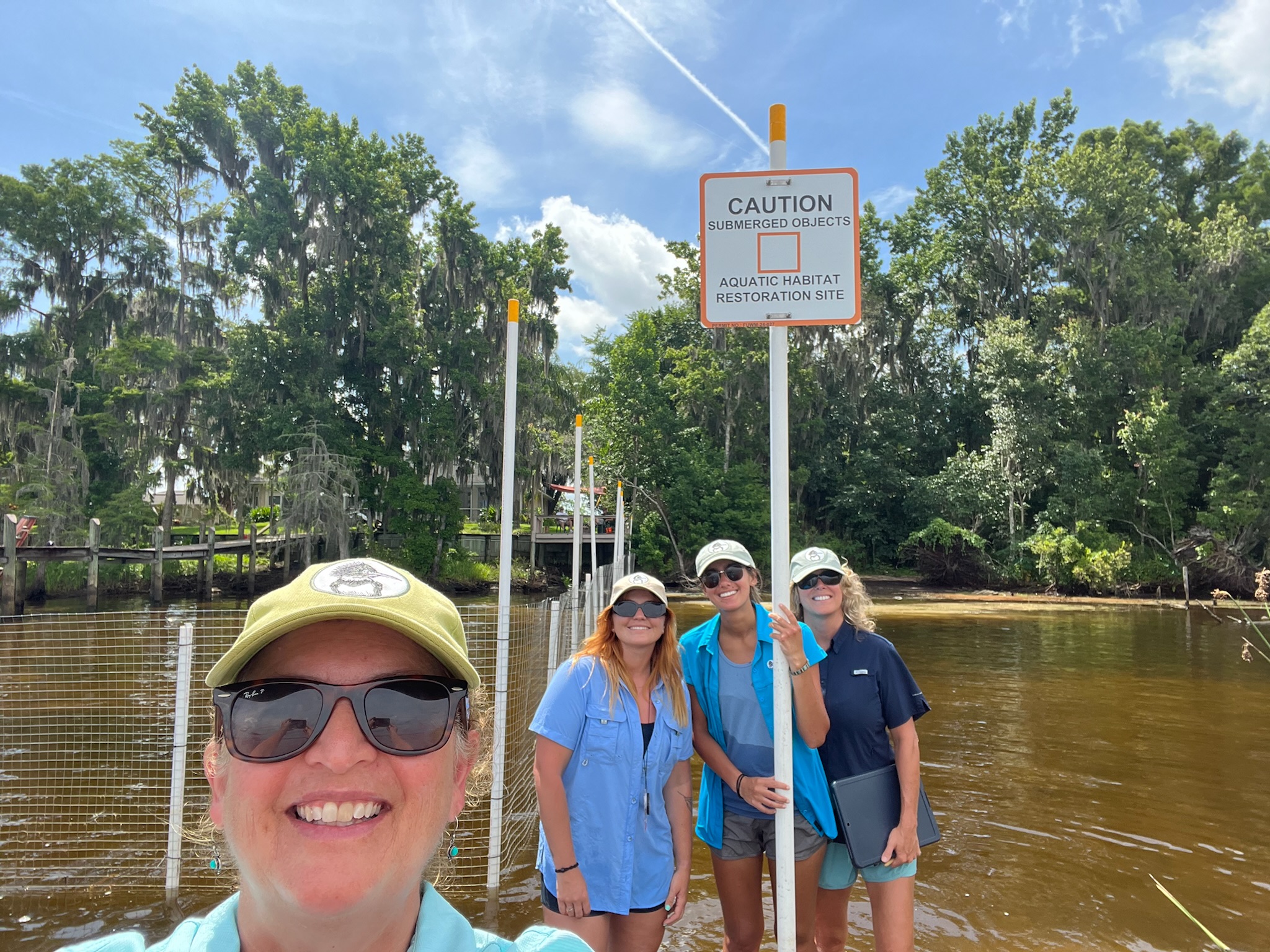 No adverse environmental or navigational impacts are anticipated as a result of this project. The installation of protective enclosures does not involve excavation, dredging, or the placement of fill, and no impacts to surface waters or jurisdictional wetlands are expected. Enclosures are situated in shallow, nearshore areas well outside of navigational channels and will not interfere with vessel traffic. Reflective tape was affixed to the tops of the 10-foot PVC support poles to enhance visibility and ensure boater safety.
Installation does not require the use of heavy machinery, and all construction activities were conducted manually to minimize environmental disturbance. To further reduce turbidity and protect aquatic resources, installation was scheduled during low tide conditions. Prior to fully enclosing each structure, field personnel carefully inspected the interior to confirm the absence of manatees or other aquatic grazers. Informational signage is securely attached to each enclosure to notify boaters and the general public of the project’s purpose and presence.
How will manatees and hungry grazers be affected by this project?
Aquatic plants and Submerged Aquatic Vegetation (SAV) provide food for manatees. Manatees consume from 4-11% of their body weight daily. Vallisneria americana, commonly known as eelgrass, is the preferred food type for manatees. The St. Johns River SAV is suffering mounting threats and stress resulting in the near demise of our river’s submerged grasses and the much-needed food source for species such as the manatee.
Evaluating grazing pressure is a common enterprise used to understand the potential causes for SAV loss. Manatees are one of the known dominant grazers of SAV. Grazing pressure has not historically been a major stressor of SAV due to the naturally abundant grasses. However, due to other stressors (primarily light attenuation, salinity, and water quality), SAV is unable to increase its growth rate and build the biomass necessary to revive the once-ample beds throughout the river. This creates a ripple effect up the trophic chain and starves aquatic wildlife that rely on SAV.
The goal of this effort is to simply protect surviving, yet struggling, native eelgrass and its viable seed bank/rhizome network and its ability to grow, germinate and disperse without grazing pressure.
Once the grass is abundant enough without the help of the enclosures, they will be released and provide a food source for grazers such as manatees that heavily rely on SAV for survival.
What materials are being used to construct the enclosures?
In order to install the enclosures, T-posts are driven into the ground at five-foot intervals. The framework alternates between ten-foot and five-foot sections of PVC pipe (e.g., a ten-foot PVC pipe followed by a five-foot pipe).
After the T-posts and PVC pipes are in place, fence material is secured to the PVC using zip ties — four (4) zip ties per PVC section including one at the very bottom of the PVC to ensure the fence remains flush with the riverbed to ensure stability. The fence must rest firmly on the riverbed, in direct contact with the sediment, to prevent grazers from entering the enclosure.
The type of material for each item listed above is explained below:
T-Posts: At 6.5 ft. in length, these posts are finished with enamel for rust resistance above and below the ground. These posts are hammered into the substrate using a post driver and are designed to withstand great force.
PVC POLES: At 1-1/2 in. x 10 ft, these PR-160 poles are designed for pressure systems not exceeding 140°F. They are highly resilient, with high-tensile and high-impact strength. All are inert to attack by many chemicals and can withstand high pressure for long periods. Before placement over the metal T-Posts, the tops of the poles are wrapped in reflective tape as a precautionary safety measure to boaters.
FENCING: The protective fencing used was 16-gauge stainless steel mesh, featuring a 1.5-inch square grid with dimensions of 5 feet by 100 feet, selected for its durability and longevity in outdoor environments. The fence was securely fastened around the exterior of the PVC poles, with the material pulled taut to ensure stability. The mesh was attached to each PVC pole using high-strength zip ties to maintain tension and prevent displacement over time.
SIGNAGE: The signage for this project consists of 18-inch by 18-inch aluminum signs (one per site) labeled “Caution Submerged Objects – Habitat Restoration Site.” These signs have been approved by the Florida Fish and Wildlife Conservation Commission (FWC) under permit number FUWM-24-027. Constructed from .080″ aluminum substrate, the signs are designed for superior rigidity, impact resistance, and long-term durability, making them ideal for outdoor applications, particularly in environments exposed to moisture, brackish water, or wind-blown debris. Each sign underwent a professional surface preparation process to enhance its durability:
- Thorough cleaning and surface abrasion to improve adhesion.
- Application of a bonding primer to increase corrosion resistance.
- Finish coating with high-durability enamel, formulated to withstand UV radiation, moisture, and salt exposure.
- A final clear protective topcoat seals the surface, prolonging color retention and shielding against oxidation and mineral deposits.
The signs are mounted on 10-foot PVC poles, with reflective tape for increased visibility. Mounting is secured using 5/16-inch by 2-inch by 3-inch stainless steel U-bolts, crafted from corrosion-resistant steel to ensure long-lasting stability and performance.
Can the materials be reused after the project completion?
No, the enclosure materials will not be reused at the conclusion of the project. Due to prolonged exposure to environmental conditions, including weathering and the dynamic nature of the river system, the materials are expected to experience significant degradation after 2 years of being in place. As a result, they will not be suitable for reuse.
What does maintenance and inspection of the enclosures look like?
To make this project possible, SJRK partnered with waterfront homeowners, and all project sites are located on privately owned properties.
Regularly-scheduled inspection will occur monthly by the homeowner. Irregular inspection will occur before and after large storm events to ensure the enclosure’s structural integrity has not been compromised.
If maintenance (repairing holes, restoring knocked-over fencing, etc.) is necessary, the homeowner and St. Johns Riverkeeper will work in conjunction to make repairs as soon as possible. Prior to any hole repair, the enclosure area will be thoroughly inspected to ensure no grazers are present.
The protective enclosure design is stable and established to withstand normal and tropical storm conditions. In the event of severe storm systems, monitoring will be conducted within 24-48 hours and repairs will be commenced within 1-2 weeks.
How can I get involved?
If you live along the river, we welcome your feedback on the aquatic and shoreline vegetation in your area. Your observations are valuable and will contribute to our ongoing analysis and data collection efforts. Please consider completing this homeowner SAV survey to share your input.
At this time, there are no volunteer opportunities for enclosure installation, as this season’s project phase is concluding.
We are currently in year 3 of our five-year initiative, the SAVe Our River’s Grasses Expedition, which aims to better understand and address the decline of SAV in the St. Johns River. During each field visit, our team surveys an 80-mile stretch of the river between Doctors Lake and Lake George. Over the course of several days, we search for remaining grass beds, collect ecological measurements, conduct water quality testing, and investigate potential strategies for restoring this critical habitat.
If you would like to get involved with our Expedition, please email our advocacy specialist, Soraya Aidinejad at soraya@stjohnsriverkeeper.org. We are continually seeking skilled drone operators, videographers, and photographers to help document our fieldwork and conservation efforts.
If you have any questions or concerns related to SAV or other river-related issues, please don’t hesitate to contact us via email at report@sjrk.org or call our hotline at (904) 256-7591.